How to Choose the Right Women's Clothing Manufacturer
Choosing a women's clothing manufacturer is not simply a price comparison. The best fit can make a collection easier to develop, clearer to approve, and more predictable to ship; the wrong fit can leave a buyer resolving avoidable questions after materials are ordered. Start with evidence about the supplier's relevant product experience, development method, communication, and quality process. Then compare quotations on the same brief. This approach gives overseas buyers a practical basis for selecting a partner rather than relying on a website claim or one attractive sample.
Match the factory to the garment
Ask what categories the factory makes regularly and request relevant samples or construction photos. A tailored blazer, a padded jacket, a PU moto jacket, and a light blouse create different pattern, material-handling, and finishing challenges. Check whether the supplier understands your target market's fit expectations, labeling rules, and packaging needs. Experience in womenswear is useful, but it should be tested against your particular silhouette, fabric, trim, and size range.
Review development before committing
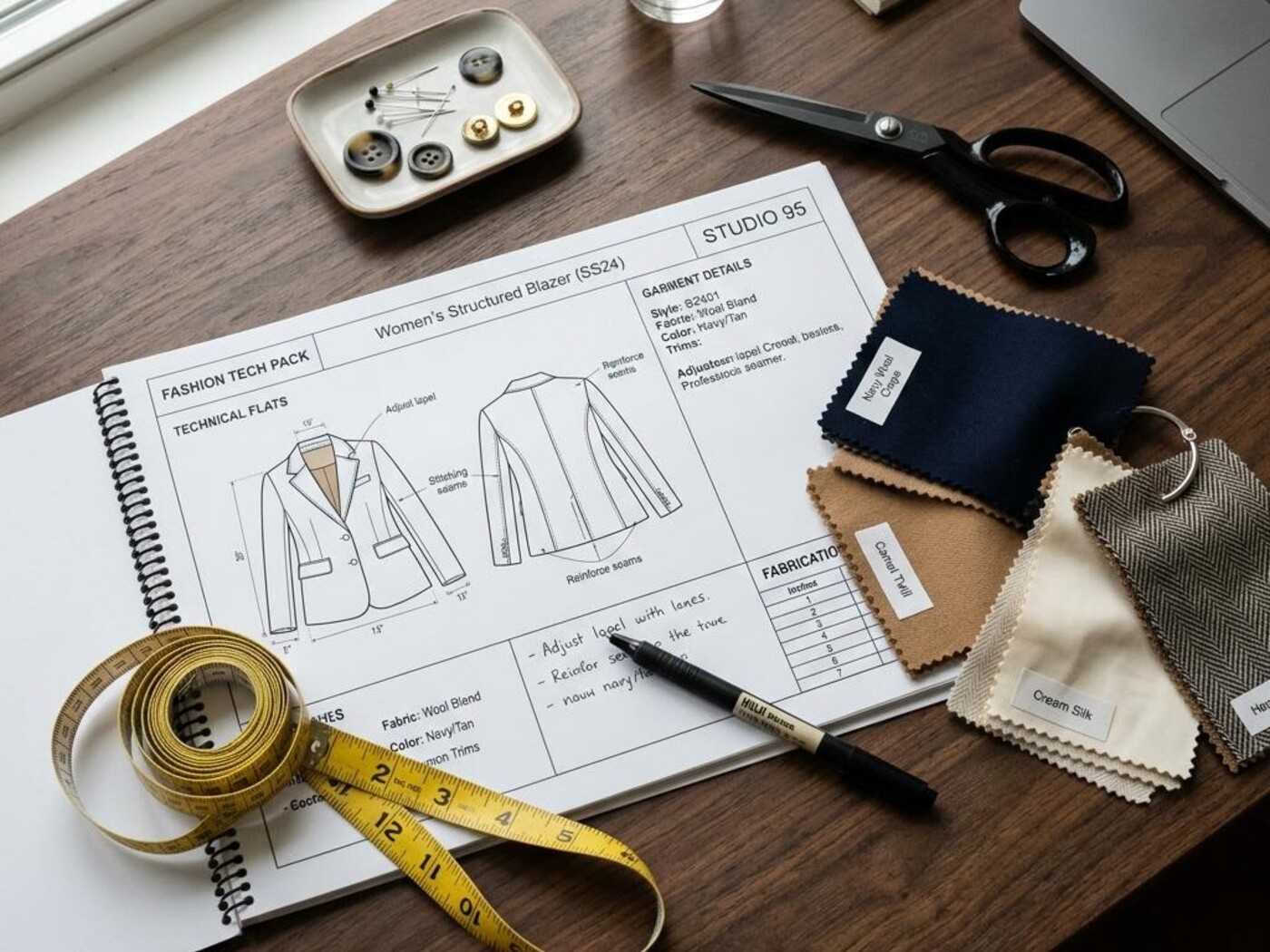
A capable supplier asks questions instead of guessing. Send a tech pack and ask how they would clarify measurements, tolerances, seam construction, fabric performance, and artwork. Review the sample against a written comment sheet, not memory. The pre-production sample should record the agreed fabric, color, trims, measurements, workmanship, labels, and packing. It becomes the common reference for bulk production, so approvals should be dated and changes controlled.
Evaluate quality and communication
Ask how incoming materials, work in progress, and finished garments are checked; ask who reports issues and how corrections are documented. Buyers should also establish one contact, a version-control method, and a routine for decisions. Useful questions include: Which files are current? What must be approved before purchasing? What is the escalation route if a material differs from the approved sample? Clear answers matter more than broad promises.
Compare the whole commercial picture
A low unit price may omit tooling, development, testing, freight terms, or a more expensive material option. Compare currency, Incoterm, payment stage, quote validity, expected material availability, and assumptions behind each quote. Ask suppliers to separate known costs from estimates and identify decisions that could change the price. This makes it easier to decide whether to simplify a detail, adjust a fabric specification, or protect a feature that customers value.
Buyer checklist
Before requesting a final proposal, prepare: style sketches and technical pack; fabric composition, weight, color and hand-feel targets; trim and label specifications; size chart and grading direction; order quantity by style and color; target market and compliance questions; packaging and shipping terms; target delivery window; and a sample approval process. Bolong, founded in Wenzhou in 1994, supports womenswear OEM, ODM and private-label programs with development, sourcing, sampling, manufacturing, own QC, export packing, documentation and shipment coordination. Confirm suitability for your program directly.
Partner with Bolong
Applying these principles is easier with an experienced manufacturing partner. Bolong has over 30 years of experience managing the complexities of international womenswear production.
Discuss your requirements